Why Korean Cafes Became Living Rooms, Offices and Libraries
Do Koreans really love coffee this much, or are they buying something else with the Americano: two hours of private space in a very crowded city?
Try arranging a meeting in Seoul with someone you do not know very well. A restaurant requires a negotiation about food. A bar requires a negotiation about alcohol, time of day and, sometimes, the relationship itself. A home is too intimate. A park gives the weather a veto. A hotel lobby feels expensive before anyone has ordered anything.
“Shall we meet at a cafe?” solves almost everything. A first date can happen there. So can a tutoring session, an insurance consultation, a freelance pitch, a breakup, a job interview, or three hours of pretending to work while rearranging a PowerPoint deck. Nobody needs to explain why they are there.
That flexibility helps explain an extraordinary number. South Korea had 95,337 operating cafes in the first quarter of 2025, roughly double the number recorded in 2018. Even allowing for tiny takeout shops, that is a lot of espresso machines for a country of about 52 million people. “Koreans like coffee” is true. It is also not nearly enough.
The ancestor of the laptop worker was already sitting in a dabang
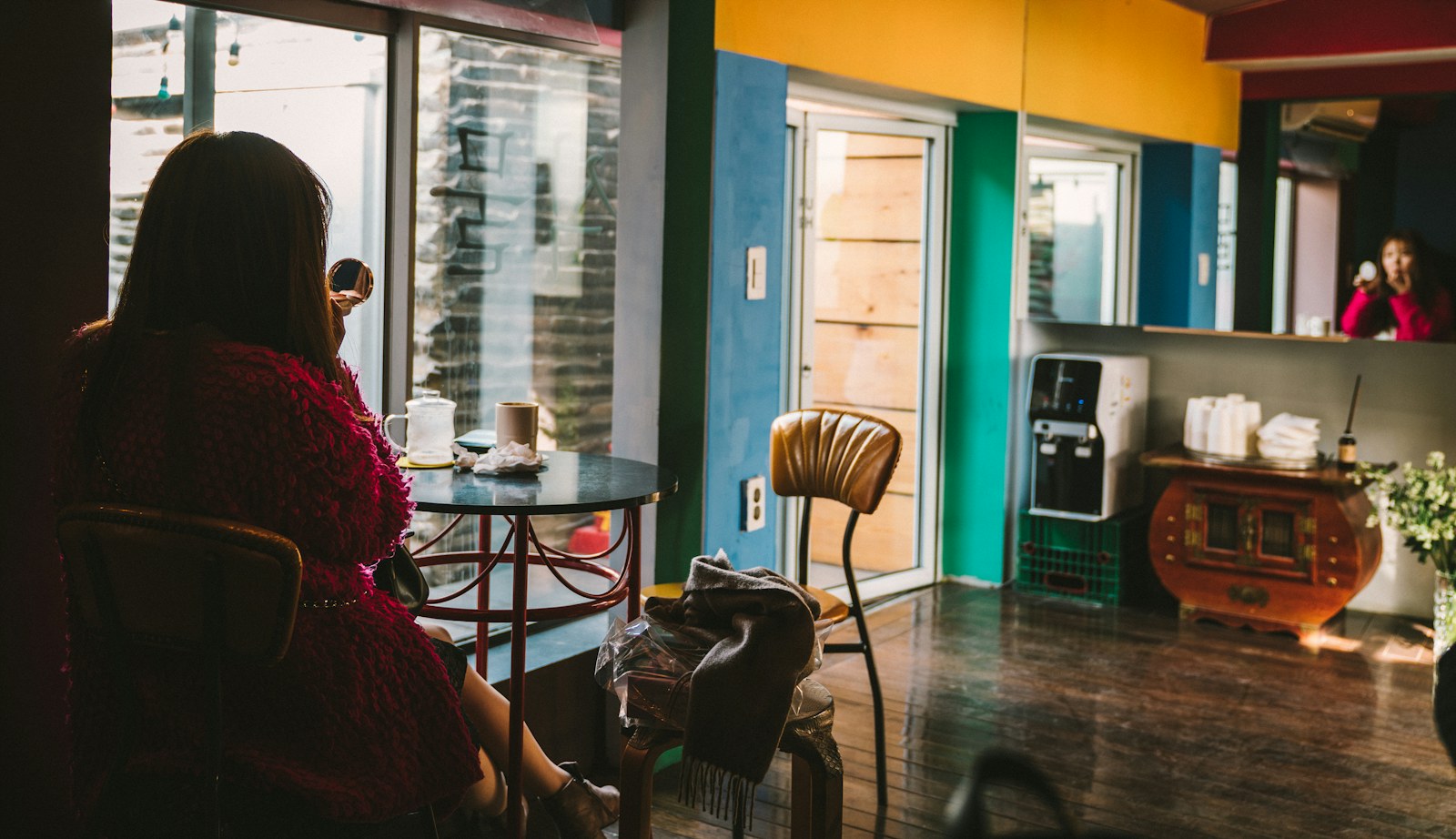
The modern Korean cafe has a famous resident: the cagongjok, literally the “cafe-study tribe.” At the mild end, this means a student with a notebook and iced Americano. At the ambitious end, it can mean a laptop stand, keyboard, tablet, headphones, charger, power strip and enough equipment to suggest a small merger is being negotiated.
In 2025 Starbucks Korea had to ask customers not to bring in desktop computers, printers, large dividers and other equipment that effectively converted shared tables into private offices. Korea had reached the point where a coffee chain needed a light zoning policy.
But the habit is older than Starbucks. In the 1970s, Korean dabang — coffee and tea rooms that functioned as social salons — were sometimes used by small businessmen who had no proper office. They received calls there, asked staff to take messages, met clients and conducted business over coffee. No Slack, no WeWork, no MacBook. Just a phone on the counter and a waitress who knew who Mr. Kim was.
Music dabang served another function. Young people went to hear records, meet friends and absorb whatever counted as cool that month. Long before “third place” became a fashionable urban-planning phrase, Korea had already worked out that a beverage shop could be a social utility.
Starbucks did not bring coffee to Korea. It brought permission to stay
When Starbucks opened its first Korean store near Ewha Womans University in 1999, Korea did not have a coffee shortage. Office workers had instant coffee. Restaurants often had vending-machine coffee by the exit. A sachet of coffee, sugar and powdered creamer could be made almost anywhere for almost nothing.
What the new cafe chains normalized was a different product: a place where you could remain without much explanation. You could come alone. Air-conditioning was included. So was a bathroom. Later came Wi-Fi and power outlets. Nobody stood over you asking whether you planned to order a second meal.
An Americano can look expensive if you calculate the cost of beans and water. It can look absurdly cheap if you calculate the cost of renting a heated or air-conditioned seat in central Seoul for two hours.
The most expensive ingredient in a Korean cafe may not be the coffee. It may be the square meter underneath your chair.
Small homes created a market for rented living rooms
In 2024, single-person households accounted for 36.1 percent of Korean households. That does not mean every person lives in a shoebox, and it certainly does not explain every cafe. But the direction of Korean urban life has been unusually friendly to cafes: more people living alone, more young adults in studios, and many unmarried adults still living with parents in homes where “bring six friends over” is technically possible and socially exhausting.
The cafe solves this without requiring anyone to buy a larger apartment. Need a living room? Order coffee. Need a quiet desk? Order coffee. Need neutral territory for a difficult conversation? Order coffee. Korea outsourced a surprising amount of domestic space to small business owners.
This also changes how the price of coffee should be understood. The customer is not only paying for caffeine. The bill quietly includes rent, electricity, heating, cooling, cleaning, Wi-Fi, furniture, toilet paper, music, and the right to occupy a rectangle of floor without being asked what exactly you are doing there.
Then customers discovered the loophole
There is one problem with selling space as an invisible extra: customers may actually use it.
A person buys one coffee and studies for four hours. They charge two devices. They use the bathroom twice. They occupy a four-person table alone. They leave for lunch and park a laptop on the chair like a tiny flag claiming sovereignty.
For the customer, this is excellent value. For the cafe owner paying Seoul rent, it is a different equation. The very thing that made cafes attractive — “stay as long as you like” — can become an attack on table turnover.
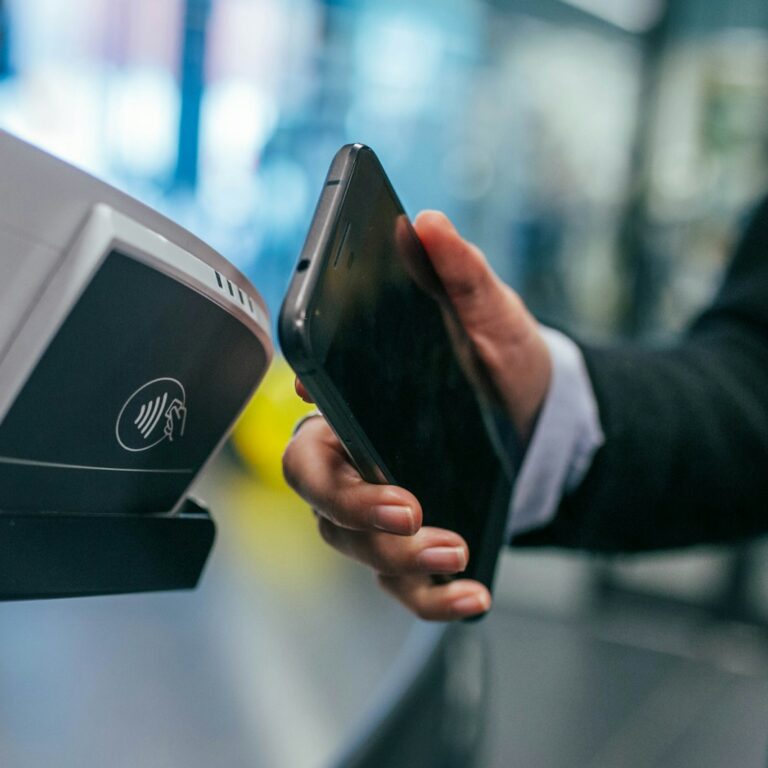
Korea’s answer was wonderfully literal: remove the coffee and sell the seat directly. The result is the study cafe, a hybrid of library, study hall and self-service coworking space. You pay by the hour, enter through a kiosk, sit at a quiet desk, use power and Wi-Fi, and nobody pretends the latte is the main event.
The evolution is almost embarrassingly clear. First, cafes sold coffee and gave you space. Then people bought coffee mainly for the space. So someone deleted the coffee and monetized the space.
Meanwhile, another industry did the exact opposite
Low-cost coffee chains boomed by making the reverse offer: if you do not need much space, why should you pay for it?
Smaller stores, kiosks, fast turnover, giant plastic cups and takeaway pricing allowed chains to strip much of the real-estate component out of the drink. The same Seoul office worker may buy a cheap coffee on the way to work, meet a client at Starbucks, spend the evening in a study cafe, and drive to an enormous bakery cafe outside the city on Sunday.
Calling all four businesses “cafes” hides what is happening. They are selling different combinations of caffeine, time, real estate and mood.
The giant suburban cafe is barely a cafe at all
Drive beyond central Seoul and the species changes again. Some Korean cafes have huge parking lots, gardens, ponds, galleries, bakeries and floor-to-ceiling windows aimed at mountains or rivers. Families drive forty minutes to drink a coffee they could have bought five minutes from home.
At that point, the coffee is closer to an admission ticket. The customer is buying half a day out.
This is why the real competitors of Korean cafes are not only other cafes. They are libraries, parks, cinemas, coworking offices, hotel lounges, shopping malls and, most of all, home. A cafe competes for your time and your need to be somewhere that is not where you live or work.
Ten thousand living rooms still need someone to pay the rent
The romance looks different from behind the counter. Korea’s cafe count finally began to fall in 2025 after years of explosive growth. The consumer gets extraordinary choice. The owner gets rent, wages, electricity, ingredient costs, card fees and a customer who would like excellent coffee, beautiful interiors, clean bathrooms, a power outlet, parking and three hours of peaceful seating for as little money as possible.
It is a demanding brief.
That may be the most Korean part of the story. A dense city created enormous demand for flexible private-public space. Entrepreneurs rushed to supply it. Competition made the spaces better. Consumers learned to expect more. And eventually the person holding the lease discovered that everyone loved the cafe except the spreadsheet.
So yes, Koreans love coffee. But that explains only the liquid. The real business is a little stranger.
An Americano in Korea can be a drink, a desk rental, a living-room reservation, a first-date permit, a meeting-room booking and a socially acceptable reason to sit alone in public for two hours.
No deposit required.
Bathroom included.