Why Do Korean Restaurants Serve Banchan for Free?
A bottle of makgeolli came with soup
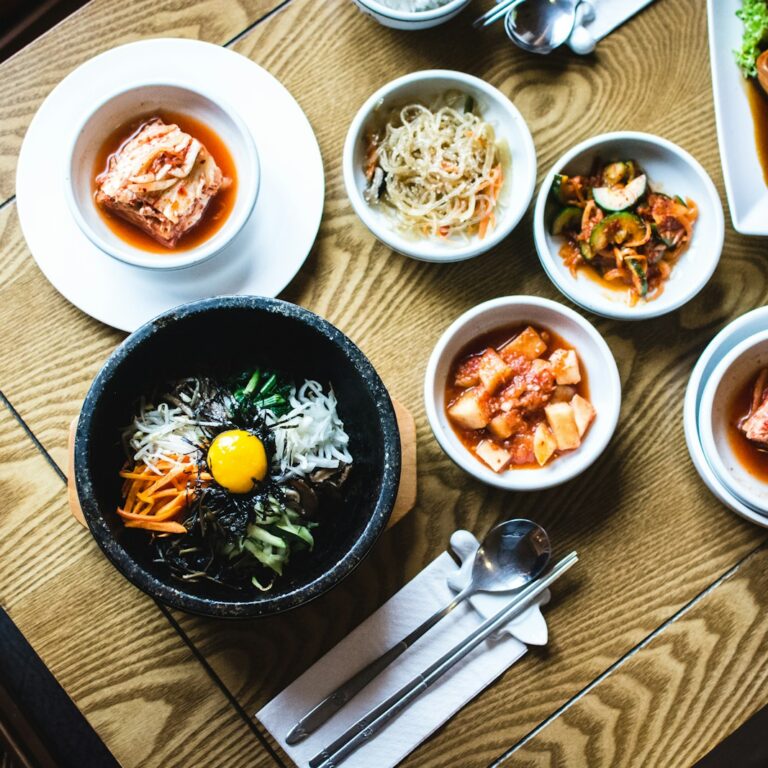
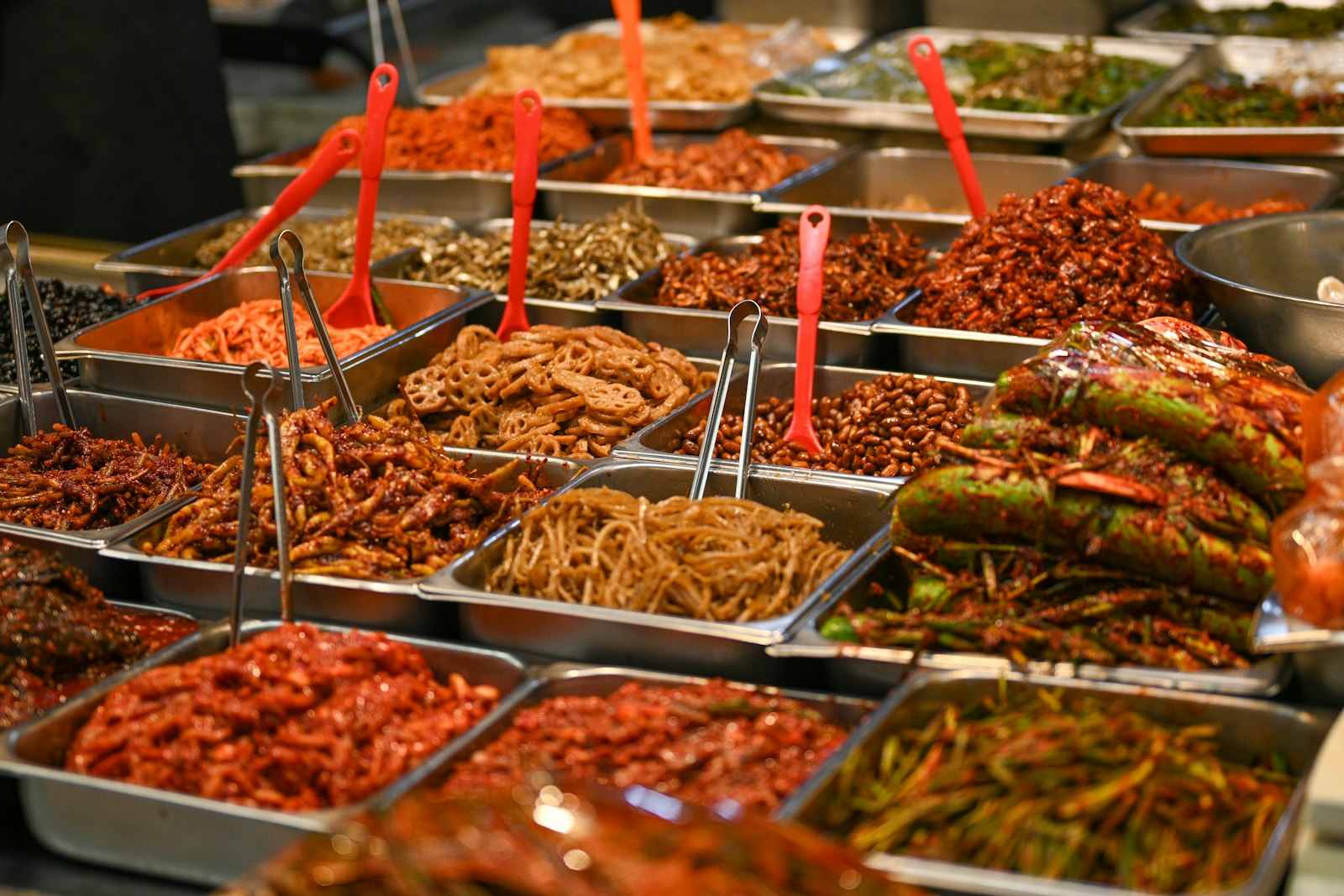
About forty years ago in Jeolla Province, I could order one bottle of makgeolli and receive a bowl of seonji-guk—soup made with congealed ox blood—and four side dishes. Order instant noodles, and six little plates might appear. The receipt listed the drink or the noodles. It did not list the dishes. If one ran out, the owner refilled it.
To an outsider, the arithmetic makes no sense. How can seven dishes become one line on a bill?
Even many Koreans now hear this as a story from another age. Ingredients cost more. Labor costs more. Fewer people are willing to spend every morning washing, blanching, seasoning and plating six different foods that the customer does not order by name. Restaurants reduce the number of dishes, offer a self-service bar or charge for premium refills.
Yet the original question remains. Why did Korean restaurants give away food in the first place?
“Korean generosity” is only part of the answer. Banchan was never conceived as a basket of independent products. The traditional unit of a Korean meal is the whole table: rice, soup, kimchi and several chan working together. The side dishes were not free. Their cost was built into the meal.
The first character in banchan means rice
The Sino-Korean word banchan is written 飯饌. Ban means cooked rice; chan means food served with it. Its name declares its function.
A plate of salted anchovies is too intense to eat alone. A mouthful of soybean-paste-seasoned greens may taste too salty by itself. Put either beside a spoonful of rice and the ratio becomes right. Rice softens heat and salt. Fermented sauces give plain grain depth. Soup resets the mouth. Kimchi makes the next spoonful desirable.
This is why translating banchan simply as “side dishes” can mislead. Bulgogi may look like the main event, but the meal actually moves through combinations of rice, soup, vegetables, pickles and fermented sauces. UNESCO describes Korean jang—soy sauce, soybean paste and red-pepper paste—as a foundation of a rice-based diet, used to connect vegetables, fish and meat.
A refill, therefore, was not originally understood as another free product. If the kimchi disappeared while rice remained, a working part of the meal was missing. The restaurant replenished it so the customer could finish the rice.
Jeolla became especially famous for abundance. Fertile plains, mountains, seafood, fermentation and market towns all supplied the table. Competition and hospitality also turned the number of dishes into a visible measure of care. Plenty was not only quantity; it was social language.
Koreans studied how to eat plants
The largest world inside banchan is not meat. It is plants.
Spring brings shepherd’s purse, wild chives, mugwort, water parsley and dureup shoots. Summer brings cucumber, eggplant, perilla leaves and peppers. Autumn deepens mushrooms and roots. Before winter, cabbage and radish are salted and fermented. A plant can be eaten fresh, blanched, stir-fried, dried, pickled or aged in sauce—and become a different banchan each time.
The achievement was not merely finding edible plants. It was learning to make difficult plants edible. Bracken fern, or gosari, naturally contains toxic compounds and must be properly heated and prepared. Dureup and several wild spring greens also require blanching. Calling this “Koreans eat poisonous plants” romanticizes danger. The real tradition is accumulated knowledge: how to reduce toxins and bitterness, preserve aroma and extend the range of food.
Namul is not simply evidence that poor people once ate grass. It is a technology of ecology, timing, detoxification, drying and fermentation.
The joke about why American troops never leave Korea
There is an old Korean joke:
American troops stay because they can train for every extreme climate in one country.
Winter winds make Korea feel like the Arctic. Humid summer heat feels worse than a desert. Spring brings dust and violent temperature swings; summer brings monsoon rain and typhoons. On the west coast, the sea appears to withdraw beyond the horizon and exposes enormous tidal flats. A few months later, the mountains turn red and gold.
This is a joke, not an explanation of the U.S. military presence. Korea is neither the Arctic nor a desert. But the joke catches something real: a small peninsula experiences large changes in temperature, moisture, rainfall and coastal conditions.
Those changes helped create banchan.
Spring mountains produce young greens. Summer fields overflow with watery vegetables. Autumn supplies grain, mushrooms and roots. Winter once closed much of the fresh-growing season. The cold, deep East Sea, the island-dotted South Sea and the Yellow Sea’s tidal flats produce different fish, shellfish and seaweeds.
The Yellow Sea mudflats are not empty expanses of mud. Rivers deliver nutrients, while strong tides, islands and bays create highly productive habitats. UNESCO recognizes Korea’s getbol for exceptional biodiversity. Clams, octopus, crabs, oysters, seaweed and salt-tolerant plants entered local meals; sea salt and fermented seafood then helped transform inland cabbage into kimchi.
Abundance, however, arrives all at once. Spring shoots become tough within days. Summer vegetables flood the market. Winter removes the field. Koreans therefore learned not only to eat a season, but to move it into the next one: blanch and dry greens, salt vegetables, ferment seafood, age food in jang, simmer ingredients until moisture falls.
Banchan multiplied not because ingredients were always plentiful, but because people had to bridge moments of excess and scarcity. Korea’s four seasons are not four pretty postcards. Historically, they were four different survival conditions. The small dishes preserve their record.
Hot courses versus a table that survives cooling
Modern Western course service was strongly influenced by service à la russe. In the early nineteenth century, Russian diplomat Alexander Kurakin introduced Parisian society to serving dishes sequentially rather than displaying everything at once. Sequential service helped food arrive hot and reduced the excess of the older French presentation.
It is too simple to say Russia invented courses because the country was cold. Court ritual, labor, tableware, display and efficiency all mattered. Still, the desire to serve hot food in good condition creates a useful contrast with a Korean table.
Banchan generally arrives at once, and much of it is prepared in advance. It cools. Korean cooks therefore developed many dishes that remain delicious at room temperature or cold. Pickles and kimchi stay vivid; braised foods absorb seasoning; namul depends more on aroma and balance than steam.
Hot rice and soup meet cool or room-temperature sides. This is not failed fine dining. It is a practical architecture that lets one kitchen feed many people and lets the diner choose among several tastes at once.
When “free” hides waste
The customer may not see a separate price, but ingredients, water, gas, refrigeration, washing and labor are never free. A tiny plate of namul can require more work than its size suggests.
The old model carries three modern costs: labor, waste and unwanted choice. Food returned from a table should not be reused. Automatically serving six dishes means some will be discarded untouched. “Generosity” can become a machine for waste.
Smaller first portions and self-service refills are not necessarily the death of Korean hospitality. They can be a recalculation of labor, hygiene and waste. The best rule is not “unlimited”; it is “take a little, choose what you like, return if needed.”
The future of banchan may involve fewer but more exact dishes: kimchi, two reliable basics and one changing seasonal plate. New flavors—basil, avocado, even mala spices—can enter the form if they answer the old questions. Does the acidity brighten rice? Is the salt right for one spoonful? Does the texture survive cooling? Does it invite the next bite?
The blood soup and four dishes that came with my makgeolli may not return. We cannot demand forty-year-old prices and labor from today’s restaurant. But the principle remains: many small flavors help one bowl of rice reach its end; seasonal plants are not wasted; what is available is shared, and what runs short is replenished.
Banchan is not special because it is free. It is special because it designs a relationship among rice, season, labor and people.
References
- UNESCO, “Knowledge, beliefs and practices related to jang making in the Republic of Korea”: https://ich.unesco.org/en/RL/01975
- UNESCO, “Kimjang, making and sharing kimchi in the Republic of Korea”: https://ich.unesco.org/en/RL/00881
- Korea.net, “Energy-boosting seasonal vegetables signal spring’s arrival”: https://www.korea.net/NewsFocus/Culture/view?articleId=196321
- UNESCO World Heritage Centre, “Getbol, Korean Tidal Flats”: https://whc.unesco.org/en/list/1591/
- Bernardaud / Musée des Arts de la Table, From Napoléon Bonaparte to Louis-Philippe: https://bernardaud-prod.s3.eu-west-3.amazonaws.com/file_system/files/attachments/000/000/830/original/Catalogue_AMR_EN.pdf
Editorial note: The opening scene is the author’s personal memory. Banchan customs vary by restaurant, period and region and should not be generalized to every establishment in Jeolla.