From a $3 Beauty Product to a Global Obsession
How K-Beauty Conquered the World — and Why Korea’s Damn Picky Consumers Deserve More Credit
More than twenty years ago, a small Korean cosmetics company tried something that sounded slightly ridiculous.
Give the cosmetic away. Charge only for delivery.
Then somebody looked at the numbers.
And discovered that the company could still make money.
That raised a much more interesting question:
If a company can practically give the product away and still survive, what exactly have consumers been paying for all this time?
The company was MISSHA.
Two decades later, Korean sunscreens go viral on TikTok, Korean serums sell out overseas, “glass skin” has entered the global beauty vocabulary, and Sephora itself has partnered with Olive Young to bring Olive Young-curated K-beauty selections to markets around the world.
So what happened?
The lazy answer is:
K-pop.
It’s not entirely wrong.
But it misses the best part of the story.
BTS did not invent the serum.
BLACKPINK did not invent cushion foundation.
K-beauty was built first by an unusually intense ecosystem:
a small domestic market, brutal competition, absurdly demanding consumers, world-class contract manufacturers, fast product planning, strong value for money — and eventually K-pop and social media acting like rocket fuel.
That is the real story.
1. First, Korea Asked a Dangerous Question: Why Is Makeup So Expensive?
MISSHA’s early strategy attacked one of the oldest assumptions in beauty:
cosmetics were supposed to feel expensive.
For decades, beauty pricing included much more than the formula inside the bottle.
Heavy glass.
Fancy boxes.
Department-store counters.
Salespeople.
Celebrity campaigns.
Distribution margins.
Advertising.
Brand prestige.
MISSHA stripped away much of that structure and became famous for cosmetics priced at just a few thousand Korean won.
The idea was almost offensively simple:
What if consumers paid mainly for the product?
Today we would probably call it DTC thinking, unbundling or disruptive pricing.
At the time, it felt radical.
And once Korean consumers realized that a decent cosmetic did not necessarily need to cost luxury prices, the doors opened.
Wide.
2. Then the Korean Beauty Market Turned Into a Street Fight
MISSHA was not alone for long.
The Face Shop.
Etude.
Skin Food.
Innisfree.
TonyMoly.
Nature Republic.
And many others.
At one point, districts like Myeongdong seemed to have a beauty store every few steps.
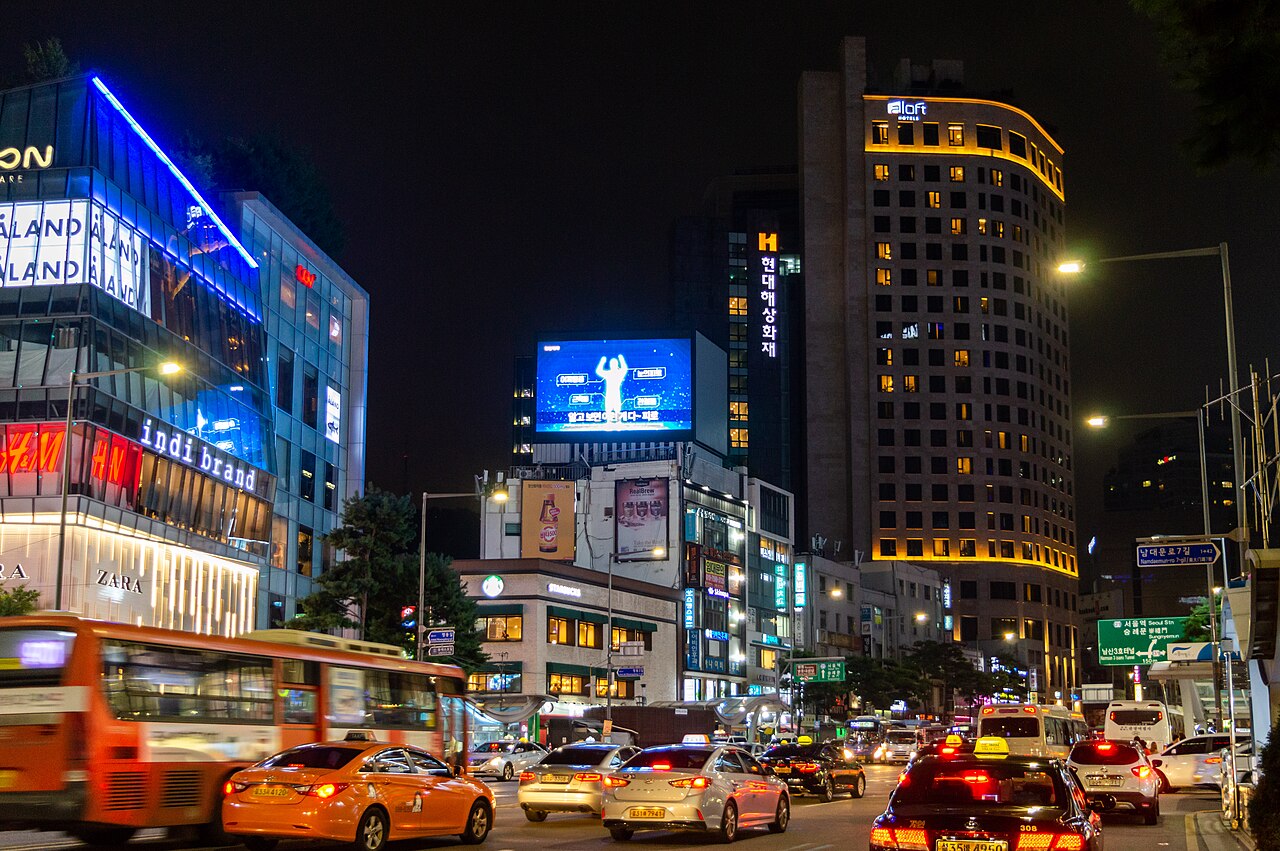
The problem?
Korea is not a gigantic domestic market.
The U.S. has hundreds of millions of consumers.
China has more than a billion.
Korean brands were fighting over a comparatively small pool of customers.
And there were too many brands.
So companies had to do something.
Anything.
Make it cheaper.
Make it prettier.
Make the texture different.
Find a strange new ingredient.
Create a new application method.
Invent a new category.
Launch a collaboration.
Change the packaging.
Do it before everybody else.
In other words:
Korean beauty companies became innovative partly because they had no choice.
A small market turned into an extremely aggressive training ground.
3. Meet the Secret Weapon of K-Beauty: Damn Picky Consumers
This part of the K-beauty story does not get enough attention.
One of the industry’s greatest competitive advantages was not a company.
It was the customer.
And Korean beauty customers can be, to put it affectionately,
damn picky.
A consumer might pick up one bottle and ask:
What ingredients are in this?
Does it contain fragrance?
How much niacinamide?
Is there alcohol?
Is it suitable for sensitive skin?
What is the pH?
Is the review sponsored?
What do acne-prone users say?
What are the negative reviews?
Is there a cheaper product with almost the same formula?
Imagine being a product manager.
It is exhausting.
It is also an extraordinary pressure cooker for better products.
4. Koreans Became Suspicious of Ingredients — Sometimes Too Suspicious
Ingredient consciousness became unusually visible in Korea.
Certain consumers started avoiding ingredients such as particular preservatives, fragrances, mineral oil, silicones or other substances even when their use was permitted and the actual risk depended on dose, formulation and exposure.
Scientifically, this requires an important correction.
“Chemical” does not mean “bad,” and “natural” does not mean “safe.”
Everything is made of chemicals.
Plant-derived substances can also irritate skin or trigger allergies.
The U.S. FDA explicitly states that the source of an ingredient does not determine its safety and that organic or natural cosmetics are not automatically safer.
But from a business perspective, something fascinating happened.
Even when consumer fear went beyond the science, the fear still changed the market.
A brand could say,
“But this ingredient is permitted at this concentration.”
The customer could simply reply,
“Fine. I’m still not buying it.”
Game over.
So brands adapted.
Gentler formulas.
Shorter ingredient lists.
Fragrance-free products.
Sensitive-skin testing.
Barrier-focused skincare.
Ingredient percentages on the front label.
Centella asiatica.
Heartleaf.
Rice.
Green tea.
Ceramides.
“Soothing.”
“Barrier.”
“Low irritation.”
These ideas moved from the laboratory to the front of the package.
Korean consumers annoyed the hell out of product developers.
And that annoyance became an industrial advantage.
5. Then Someone Built an App for People Who Read Ingredient Lists for Fun
This is where Hwahae enters the story.
Its Korean name comes from the phrase meaning roughly:
“Analyze cosmetics.”
When Hwahae launched in 2013, its core proposition was not glamorous.
It helped consumers understand what was inside their cosmetics.
Ingredient information.
Skin-type considerations.
Product analysis.
Later, reviews and rankings.
And Koreans loved it.
By 2016, Hwahae had roughly 2.8 million cumulative users/downloads and around 800,000 monthly active users.
By 2021, it had passed ten million downloads, with millions of accumulated user reviews.
By 2024, the platform reported around 12 million cumulative downloads and 8.2 million reviews.
Think about that for a moment.
An app largely famous for helping people inspect cosmetic ingredients became a mass-market beauty platform.
That tells you something profound about Korean beauty culture.
6. In One Survey, Around 70% of Korean Women Said Ingredients Mattered
This was not just a tiny group of skincare obsessives.
A 2019 beauty trend survey of 1,500 Korean women aged 20–49 found that around 70% considered ingredients important when purchasing beauty products.
That changes an industry.
If consumers only ask,
“Is it pretty?”
brands optimize for packaging.
If consumers ask,
“Which celebrity wears it?”
brands hire celebrities.
But if consumers ask,
“What exactly is in it, why is it there, and what do people with my skin type say about it?”
brands have to become more sophisticated.
Beauty marketing starts turning into education.
Ingredient percentages become content.
Clinical tests become content.
Skin types become content.
Before-and-after reviews become content.
Even a boring ingredient list becomes part of the sales strategy.
7. Hwahae Helped Shift Power From Brands to Consumers
The old beauty model was simple.
Brand:
“Trust us. This cream is amazing.”
Consumer:
“Okay.”
Then came beauty blogs.
Consumer:
“Has anyone actually tried this?”
Then platforms such as Hwahae made the question much more brutal.
“What do people with dry skin say?”
“What about users in their twenties?”
“What are the negatives?”
“What’s actually in the formula?”
“What is the ranking?”
Hwahae started with ingredient information and later built a huge review ecosystem. Its review system was deliberately structured to surface not only advantages but also disadvantages, helping distinguish it from purely promotional beauty content.
From a brand’s perspective, this is terrifying.
From an industry’s perspective, it is healthy pressure.
You can fool people with a beautiful ad once.
It becomes much harder when thousands of users are collectively taking your product apart.
8. Korea Became One Giant Beauty Beta Test
Now imagine launching a skincare product in this environment.
You compete against dozens of brands.
You get placed next to them at Olive Young.
Hwahae users inspect the ingredient list.
YouTubers compare it.
TikTokers test the texture.
Sensitive-skin customers complain.
Ingredient nerds argue in the comments.
Everyone compares prices.
A competitor launches something similar — but slightly better — three months later.
If a product survives all of that,
it has been tested.
Not necessarily in a scientific sense.
But in one of the most unforgiving commercial environments in beauty.
That is why Korea’s relatively small domestic market became an unexpectedly powerful product-testing ecosystem.
For individual brands, it can feel like hell.
For the industry as a whole, it is a gym.
9. But Ideas Mean Nothing Without Factories — Enter Korea’s ODM Giants
There was another hidden advantage.
Companies such as Kolmar Korea and Cosmax.
Most global consumers will never see their logos on a bathroom shelf.
But they are central to the K-beauty machine.
In traditional OEM manufacturing, a factory largely manufactures what a brand requests.
In ODM, the manufacturer can participate much more deeply in product development:
formulation,
R&D,
texture,
ingredient combinations,
technical development,
testing,
manufacturing.
Kolmar Korea became one of the pioneers of this model in Korea and remains a major global cosmetics ODM/OEM company.
This changed the economics of starting a beauty brand.
Imagine you want to launch:
“Peach Barrier Jelly Serum.”
Without a manufacturing ecosystem, you may need:
a lab,
chemists,
equipment,
production facilities,
quality control,
years of development.
With a sophisticated ODM partner, the brand can focus more heavily on:
the consumer,
the concept,
branding,
packaging,
positioning,
content,
distribution.
The manufacturer helps turn the idea into a real formula.
Suddenly, smaller brands can compete.
This is one of the most underappreciated reasons Korean beauty can move so fast.
10. K-Beauty’s Superpower Isn’t One Ingredient. It’s Product Planning.
Korea did not invent hyaluronic acid.
It did not invent retinol.
It did not invent niacinamide.
It did not invent ceramides.
What Korean companies became remarkably good at was turning existing science, ingredients and consumer desires into products people wanted to talk about.
Ingredient.
Texture.
Application.
Packaging.
Name.
Price.
Story.
Visual.
All designed together.
A moisturizer becomes a
sleeping mask.
Toner on cotton becomes a
toner pad.
Foundation becomes a
cushion.
Healthy-looking skin becomes
glass skin.
This is an important distinction.
In K-beauty, marketing is often not something that happens after product development.
Marketing is embedded inside the product idea.
11. Cushion Foundation: When Korea Reinvented the Behavior, Not Just the Formula
Cushion foundation is one of the clearest examples.
Amorepacific began developing the concept in 2007, testing more than 200 sponge types through more than 3,600 experiments before launching IOPE Air Cushion in 2008.
By 2016, Amorepacific’s cushion products had surpassed 100 million cumulative unit sales.
But the most interesting part was not a revolutionary ingredient.
It was behavior.
Instead of opening a bottle,
pouring foundation,
using your hand or sponge,
and carrying the mess around,
you opened a compact and tapped.
Tap.
Tap.
Done.
K-beauty did not merely improve foundation.
It changed how people used foundation.
That is powerful product design.
12. Then the World Discovered Korean “Layering”
Another idea that became famous overseas was the
10-step Korean skincare routine.
Oil cleanser.
Cleanser.
Toner.
Essence.
Serum.
Ampoule.
Mask.
Cream.
Sunscreen.
At some point foreigners understandably wondered:
Do Korean women have jobs?
The ten-step routine was never a universal daily law in Korea.
The more meaningful principle was layering.
Instead of expecting one heavy product to do everything, skincare could be broken into lighter, more specialized steps.
Hydration.
Soothing.
Barrier care.
Brightening.
Exfoliation.
Anti-aging.
And again, a scientific clarification matters:
more layers do not automatically mean better absorption.
The broader K-beauty idea was about customization and segmentation, not simply applying as many products as humanly possible.
That segmentation also happened to create many more product categories.
A very convenient outcome if you happen to sell skincare.
13. Then China Became the First Great K-Beauty Gold Rush
In the 2010s, Korean pop culture surged across Asia.
K-dramas.
Actors.
Idols.
Korean fashion.
Tourism.
Chinese consumers began associating Korean beauty products with the lifestyle and appearance they were seeing in Korean media.
Duty-free stores flourished.
Myeongdong became a beauty-shopping destination.
Korean brands made serious money in China.
For a period, China became one of the most important engines of K-beauty’s overseas expansion.
Then geopolitics intervened.
Tensions surrounding the THAAD deployment and the broader restrictions commonly referred to as the Hallyu ban sharply changed the environment.
Korean companies learned a painful lesson:
Depending too heavily on one gigantic market is dangerous.
So they diversified.
The U.S.
Japan.
Southeast Asia.
Europe.
The Middle East.
Ironically, one of K-beauty’s biggest external shocks helped push it toward becoming genuinely global.
14. K-Pop Did Not Create K-Beauty. It Opened the Door.
Now we can finally give K-pop its proper place in the story.
Imagine someone in Paris, Los Angeles, Bangkok or São Paulo becoming obsessed with a Korean idol.
Music is only the beginning.
What are they wearing?
What lipstick is that?
How is their skin so glowy?
What haircut is that?
What do they eat?
What products do they use?
Culture creates curiosity.
Curiosity lowers the barrier to trying products from that culture.
K-pop and K-drama gave Korea something money alone cannot easily buy:
global cultural attention.
But the beauty products had to be ready when that attention arrived.
Luckily, they were.
ODM infrastructure existed.
Brands existed.
Product innovation existed.
Ingredient-conscious consumers had already pressure-tested the market.
Retail existed.
Then Hallyu opened the door.
15. Social Media Was Almost Perfectly Designed for K-Beauty
Then came Instagram.
YouTube.
And eventually TikTok.
This was where K-beauty had an almost unfair advantage.
Korean products were already designed to be demonstrated.
Tap a cushion.
Stick on a toner pad.
Stretch a jelly cream.
Peel off a mask.
Swatch a tint.
Show a glow.
Compare before and after.
You can understand the product in five seconds.
That matters enormously in the algorithm era.
Old-school global beauty required huge budgets.
Magazine campaigns.
Supermodels.
Television.
Department-store counters.
Today a small brand can explode because somebody makes a 14-second video.
And Korean brands had spent two decades practicing how to create products with a one-sentence hook and a visible difference.
Social media did not invent K-beauty.
It found an industry extremely well adapted to it.
16. Olive Young Is More Than “Korea’s Sephora”
Foreign visitors often hear Olive Young described as:
“Korea’s Sephora.”
It is a useful comparison.
But it is increasingly inadequate.
Olive Young does not simply sell Korean beauty.
It helps select, accelerate and validate trends.
A small brand enters.
Sales data appears.
The product climbs rankings.
A promotion explodes.
Reviews increase.
Influencers notice.
Foreign buyers notice.
International distribution follows.
Olive Young is almost like a beauty stock exchange.
The K-Beauty NASDAQ.
A brand nobody knew six months ago can suddenly hit the equivalent of a market rally.
And then came the wonderfully ironic ending.
In January 2026, Olive Young and Sephora announced a partnership to launch Olive Young-curated K-beauty zones across Sephora’s channels in North America and other major markets.
For years, people explained Olive Young by saying,
“It’s Korea’s Sephora.”
Now Sephora is literally asking Olive Young to help curate Korean beauty.
The metaphor has come full circle.
17. K-Beauty’s “Affordability” Is More Sophisticated Than Cheap Prices
K-beauty is often called affordable.
True.
But cheap is the wrong word.
The real advantage is perceived value.
For the money, consumers often get:
interesting packaging,
novel textures,
ingredient storytelling,
good sensory experience,
fast-moving trends,
strong design,
social-media appeal.
The consumer thinks:
Wait. I get all this for that price?
That is different from simply being inexpensive.
MISSHA’s original challenge to beauty pricing survived.
The question is still:
Why should this experience cost that much?
18. The Most Important K-Beauty Innovation May Have Been the Feedback Loop
Put all of the pieces together.
A Korean brand launches an idea.
An ODM company helps develop it.
It enters retail.
Consumers inspect ingredients.
Hwahae users review it.
Olive Young measures sales.
Creators make videos.
Consumers compare alternatives.
The brand studies the data.
Then launches version two.
So the system looks something like this:
Idea → ODM → Product → Olive Young → Hwahae → Reviews → TikTok → Sales → Data → Next Product
And the loop moves fast.
This matters because competitors can copy a product.
They can copy toner pads.
They can copy a cushion.
They can add centella.
They can copy packaging.
But copying an entire industrial feedback loop is much harder.
That is K-beauty’s real moat.
19. And Here Is the Irony: Even Irrational Consumer Fear Made the Industry Stronger
Remember those suspicious Korean consumers?
They were not always scientifically correct.
Natural is not automatically safer.
Synthetic is not automatically dangerous.
But consumer behavior does not need to be scientifically perfect to change an industry.
Those consumers demanded:
Tell me what’s inside.
Explain why it’s there.
Show me the evidence.
Make it gentler.
Show me the bad reviews too.
Give me an alternative.
Brands had to respond.
And by the time “ingredient-conscious beauty,” “clean beauty,” “skin barrier,” and similar ideas became global trends, Korean companies had already spent years selling to people who flipped the bottle over and read the ingredient label.
Korea’s beauty consumers were not merely customers.
They were an unpaid R&D committee.
A terrifying one.
20. So What Really Made K-Beauty Global?
Not one thing.
The formula looks more like this:
Small Market × Brutal Competition × Damn Picky Consumers × ODM Infrastructure × Product Planning × Value × Olive Young × Hallyu × Social Media
The multiplication sign matters.
K-pop alone would not have done it.
ODM alone would not have done it.
Cheap prices alone would not have done it.
Technology alone would not have done it.
All of these forces reinforced one another.
21. Twenty Years Ago, Someone Was Thinking About Shipping Costs
And that may be the most beautiful part of the story.
It did not begin with a grand government plan to conquer global beauty.
It began with companies asking annoying little questions.
Why is makeup so expensive?
Why does foundation need to come in a bottle?
Why can’t a small brand outsource R&D?
Why can’t consumers see what ingredients are inside?
Why should we trust an advertisement?
Why sell only in Korea?
Why should only huge corporations create global brands?
Those questions accumulated.
Consumers kept demanding more.
Brands kept fighting.
Factories kept improving.
Retailers kept selecting winners.
Then K-pop and social media arrived.
And the system suddenly had a global audience.
Conclusion: K-Beauty Was Built by a Very Korean Kind of Pressure
K-beauty is often described as cute packaging, innovative skincare and K-pop influence.
That is all true.
But underneath it is something less glamorous and much more important:
pressure.
A small market.
Too many competitors.
Consumers who compare everything.
Consumers who read reviews.
Consumers who question ingredients.
Consumers who switch brands without mercy.
Consumers who ask:
“Isn’t there something better?”
For companies, these customers are exhausting.
For an industry, they are priceless.
Korean consumers became K-beauty’s harshest critics and, unintentionally, one of its greatest quality-control systems.
Today the rest of the world is buying the results.
For years, foreigners were told:
“Olive Young is basically Korea’s Sephora.”
In 2026, Sephora partnered with Olive Young to bring Olive Young-curated K-beauty selections into its own global retail network.
That may be the perfect ending to the first twenty years of K-beauty.
Somewhere in Seoul today, a product team is probably looking at a perfectly decent new serum.
Someone says:
“Looks good.”
Someone else looks at the ingredients, the price, the reviews, the latest Olive Young rankings and TikTok.
Then says:
“Good? Korean consumers aren’t going to buy ‘good.’ What else have we got?”
And they start again.
That relentless dissatisfaction may be one of the most Korean — and most important — reasons K-beauty conquered the world.
Read next: In Korean, Rain Doesn’t Just Fall — why the language has a different word for every way rain falls.
More Korea, past the obvious: Beauty · Daily Life · Society
Photo by Maria Lupan on Unsplash.