
In Korean, Rain Doesn’t Just Fall
It Goes Ttok-ttok, Ttuk-ttuk, Juruk-juruk, Jwal-jwal, Kwal-kwal
Song-al song-al.
Bang-ul bang-ul.
Jo-rong jo-rong.
Dae-rong dae-rong.
Even if you do not speak Korean, say those words aloud.
Something strange happens.
You may not know exactly what they mean, but they already seem to have shape.
Song-al song-al feels like tiny round droplets gathered close together.
Bang-ul bang-ul makes you imagine distinct drops of water.
Jo-rong jo-rong suggests little things hanging delicately in clusters.
Dae-rong dae-rong feels like something dangling from the very end of a thread or branch, gently swaying.
Korean has an extraordinary number of words like these.
They do not simply tell you what something is.
They tell you how it moves.
How heavily it falls.
How softly it shines.
How rough it feels.
How awkwardly someone walks.
Sometimes they even tell you how the speaker feels about what they are seeing.
Korean does not merely describe a scene.
Very often, it animates it.
Water Is Falling. But How?

In English, you could simply say:
Water is dripping.
Perfectly correct.
But a Korean speaker may still want to know:
How is it dripping?
똑똑 — ttok-ttok
A drop falls from the ceiling.
Pause.
Another drop.
Pause.
Another.
You can almost hear the interval.
뚝뚝 — ttuk-ttuk
Now the drops feel heavier.
Rainwater falls from the edge of a roof.
Tears can fall ttuk-ttuk too.
Larger, more substantial drops.
주룩주룩 — juruk-juruk
Now the drops have become continuous.
Rain streams down.
Tears run down a face.
The water no longer arrives one drop at a time.
줄줄 — jul-jul
Water leaks continuously.
Sweat runs down your face.
Blood may run from a nose.
There is an uninterrupted flow.
좔좔 — jwal-jwal
Now there is more water.
A stream runs with visible abundance and energy.
You can almost hear it.
콸콸 — kwal-kwal
Open a floodgate.
Water gushes out.
This is no longer gentle flow.
It has volume.
Force.
Momentum.
철철 — cheol-cheol
Now there is so much that it overflows.
A bathtub spills over.
Liquid runs excessively.
The image is abundance pushed beyond the edge.
So Korean can create something like this:
ttok-ttok → ttuk-ttuk → juruk-juruk → jul-jul → jwal-jwal → kwal-kwal → cheol-cheol
This is not an official measurement system, of course.
But the perceived amount, force, continuity, speed and sound change as the word changes.
The water is still water.
Korean simply keeps zooming in.
Even Quiet Water Gets Different Words
A small stream flows gently.
졸졸 — jol-jol.
Water moves lightly against the side of a bowl.
찰랑찰랑 — challang-challang.
A larger body of water sways.
출렁출렁 — chulleong-chulleong.
Broad waves roll softly.
넘실넘실 — neomsil-neomsil.
Water begins to boil.
보글보글 — bogeul-bogeul.
The boil becomes stronger.
부글부글 — bugeul-bugeul.
A large volume rushes out.
콸콸 — kwal-kwal.
Korean often refuses to leave water as merely “water.”
It gives water a personality.
Light Doesn’t Simply Shine Either
A star shines.
A jewel sparkles.
Lightning flashes.
English already has many beautiful choices:
shine, sparkle, glitter, gleam, flash.
The point is not that Korean is somehow superior.
Every language divides experience differently.
But Korean has a particularly interesting habit:
change one sound, and the emotional or physical scale can change with it.
Take:
반짝반짝 — banjjak-banjjak
Little points of light.
Stars.
Jewelry.
A child’s bright eyes.
Small, charming flashes.
번쩍번쩍 — beonjjeok-beonjjeok
Lightning.
Strong artificial light.
Bright metal.
The light feels larger and more forceful.
One vowel changes.
The scale changes.
A banjjak-banjjak earring and a beonjjeok-beonjjeok lightning bolt do not live in the same mental universe.
You often understand that before anyone explains it.
Korean Can Turn Sound Into a Volume Knob
Linguists often discuss this kind of phenomenon under sound symbolism.
Normally, there is no logical reason a tree must be called “tree.”
The sound itself does not inherently contain the object.
But mimetic words behave differently.
Their sound often contributes to the feeling of the meaning.
Now look at Korean color words.
노랗다 — norata
누렇다 — nureota
Both might be translated as “yellow.”
But they are not the same yellow.
A bright yellow flower can be norata.
Old paper may look nureota.
Teeth may be described as nureota.
Same general color family.
Different atmosphere.
Korean Can Make Yellow Surprisingly Complicated
A beginner learns:
yellow = 노란색
Great.
Simple.
Then Korean begins misbehaving.
노랗다.
누렇다.
샛노랗다.
노르스름하다.
누르스름하다.
누리끼리하다.
누르칙칙하다.
Suddenly “yellow” has split into an entire extended family.
노랗다 — norata
The standard, recognizable yellow.
샛노랗다 — saennorata
Extremely vivid, saturated yellow.
노르스름하다 — noreuseureumhada
Slightly yellowish.
A hint of yellow.
누렇다 — nureota
A heavier, duller or deeper yellow.
누리끼리하다 — nurikkirihada
An unpleasantly murky or dirty yellowish color.
누르칙칙하다 — nureuchikchikhada
Yellowish, but dull and lifeless.
At this point color is no longer just color.
The word already contains mood and judgment.
Korean does not merely say what color something is.
Sometimes it tells you whether that yellow looks fresh, faded, dirty or unpleasant.
Texture Gets Even Worse
Something is soft.
But what kind of soft?
보들보들 — bodeul-bodeul
Fine, delicate softness.
Skin.
Fabric.
말랑말랑 — mallang-mallang
Soft but elastic.
Jelly.
Rice cake.
A baby’s cheek.
물렁물렁 — mulleong-mulleong
Too soft.
Mushy.
Lacking firmness.
폭신폭신 — poksin-poksin
Soft, airy, cushioned.
A pillow.
A blanket.
푹신푹신 — puksin-puksin
Deeper cushioning.
Something your body sinks into.
쫀득쫀득 — jjondeuk-jjondeuk
Sticky-chewy, elastic, resilient.
쫄깃쫄깃 — jjolgit-jjolgit
Pleasantly chewy.
미끈미끈 — mikkeun-mikkeun
Smooth and slippery.
매끈매끈 — maekkeun-maekkeun
Smooth, even, polished.
까슬까슬 — kkaseul-kkaseul
Slightly rough.
꺼끌꺼끌 — kkeokkeul-kkeokkeul
Rough enough to feel irritating.
오돌토돌 — odol-todol
Tiny bumps.
울퉁불퉁 — ultung-bultung
Large, uneven bumps.
Translate all of that as simply “soft,” “smooth” and “rough,” and a lot disappears.
Even Walking Is Never Just Walking
Someone walks toward you.
Fine.
But how?
사뿐사뿐 — sappun-sappun
Lightly and carefully.
살금살금 — salgeum-salgeum
Sneaking quietly.
Trying not to be noticed.
아장아장 — ajang-ajang
A toddler walking in tiny, unsteady steps.
뒤뚱뒤뚱 — dwittung-dwittung
Waddling from side to side.
성큼성큼 — seongkeum-seongkeum
Walking in large, confident strides.
터벅터벅 — teobeok-teobeok
Heavy, tired steps.
비틀비틀 — biteul-biteul
Staggering without balance.
휘청휘청 — hwicheong-hwicheong
Swaying dramatically.
쫄래쫄래 — jjollae-jjollae
Following someone around closely, almost like a little puppy.
Same legs.
Same basic verb: walk.
Yet Korean adds speed, weight, age, mood and intention.
Smiling Isn’t Just Smiling
“He smiled.”
Simple.
But Korean may ask:
What kind of smile?
방긋 — banggeut
A sweet little smile blooming on the face.
생긋 — saenggeut
A light, cheerful smile.
빙긋 — binggeut
A quiet, subtle smile.
싱글벙글 — singgeul-beonggeul
A face glowing continuously with happiness.
히죽 — hijuk
A crooked or slightly silly grin.
씩 — ssik
A quick lift of the lips.
Could be confident.
Could be mischievous.
Could be sinister.
킥킥 — kik-kik
Suppressed giggling.
깔깔 — kkal-kkal
Bright, open laughter.
껄껄 — kkeol-kkeol
Big, hearty laughter.
낄낄 — kkil-kkil
Snickering, often mischievously.
One English “smile” enters Korean and suddenly acquires facial muscles.
Korean Mimetic Words Are Tiny Movies
머뭇머뭇 — hesitating.
우물쭈물 — dithering indecisively.
꾸물꾸물 — moving annoyingly slowly.
꼼지락꼼지락 — making tiny repetitive movements.
꿈틀꿈틀 — wriggling.
바들바들 — trembling finely.
부들부들 — trembling from anger or cold.
벌벌 — shaking badly from fear or cold.
허둥지둥 — rushing around in confusion.
갈팡질팡 — going back and forth without knowing what to do.
엉금엉금 — crawling slowly.
허겁지겁 — doing something frantically because you are in a rush.
A list of Korean mimetic words sometimes feels less like a dictionary and more like a collection of miniature animations.
Why Does Korean Repeat Everything?
반짝반짝.
찰랑찰랑.
두근두근.
살랑살랑.
보글보글.
쫀득쫀득.
울퉁불퉁.
알록달록.
Repetition appears constantly.
Why?
Because repetition creates time.
반짝 — banjjak
One flash.
반짝반짝 — banjjak-banjjak
Repeated sparkling.
톡 — tok
One tap.
톡톡 — tok-tok
Repeated tapping.
두근 — dugeun
One heartbeat.
두근두근 — dugeun-dugeun
A heart that keeps pounding.
Repetition turns a static word into movement.
There is almost a GIF embedded inside the language.
“Of Course. Absolutely. Naturally. Obviously.”
Now step outside onomatopoeia and mimetic words for a moment.
Consider:
아무렴 그렇지, 그렇고말고.
Literally translating it is awkward.
Something like:
“Of course. That’s right. Absolutely.”
Informationally, this is terribly inefficient.
You could just say:
Yes.
But the feeling is different.
그래.
그렇지.
그럼.
그렇고말고.
아무렴.
All can express agreement.
But each has a different temperature.
그렇고말고 contains more than “yes.”
It carries something like:
“Of course.”
“Obviously.”
“You don’t even need to ask.”
Korean constantly attaches attitude and relationship to the bare information.
“Have You Eaten?” Is Not Always About Food
A Korean person asks:
밥 먹었어? — Have you eaten?
They may genuinely be asking about food.
But depending on context, it can also mean:
How are you?
Are you taking care of yourself?
Have you had a meal?
Want to eat together?
Likewise,
어디 가세요? — Where are you going?
is not always a demand for your exact destination.
Sometimes it is simply social contact.
Korean meaning often depends heavily on relationship and context.
You cannot master it with vocabulary alone.
At some point, you must learn to read the air.
Hangul Is Easy. Korean Is Not.
This creates one of the great jokes of Korean language learning.
Hangul itself is highly systematic.
Learn the basic letters and you can begin sounding out unfamiliar words surprisingly quickly.
A beginner thinks:
“Korean is easier than I expected.”
Then Korean introduces:
먹어요.
먹었어요.
먹었잖아요.
먹었거든요.
먹었는데요.
먹었겠네요.
먹었더라고요.
먹었을걸요.
먹었을 텐데요.
All of that grows from 먹다 — to eat.
The beginner quietly reconsiders everything.
Korean Keeps Attaching Things to Words
Korean is strongly agglutinative.
Small grammatical pieces attach to stems and create increasingly specific meanings.
Take:
오다 — to come
옵니다.
와요.
왔어요.
왔습니다.
오셨습니다.
오셨겠네요.
오셨었군요.
오실까요?
오시겠습니까?
오셨더라고요.
오신다던데요.
The basic root still means “come.”
But now the sentence may also express:
time,
politeness,
honor,
assumption,
recollection,
question,
uncertainty,
the speaker’s relationship to the listener.
A Korean word can begin to feel like Lego.
Pieces keep attaching.
And the Important Part Often Comes at the End
English tends to give you the central verb fairly early.
I love you.
Korean basic word order puts the verb at the end.
나는 너를…
“I, you…”
And now you wait.
사랑해.
I love you.
사랑했어.
I loved you.
사랑하지 않아.
I don’t love you.
사랑할지도 몰라.
I might love you.
사랑했던 것 같아.
I think I used to love you.
The crucial information arrives late.
One ending can flip the whole sentence.
Watching a K-drama without subtitles requires patience.
Very literal patience.
Then Speech Changes Depending on Who You Are Talking To
To a friend:
먹었어?
To someone you want to be polite with:
먹었어요?
To someone you honor:
드셨어요?
In a formal setting:
식사하셨습니까?
It is not only grammar.
You need to know:
Who is older?
Who is senior at work?
How close are we?
Is this the first time we have met?
Is this formal?
Should I honor the person I am talking about?
Should I honor the person listening?
In Korean, social relationships can become grammar.
And Koreans Keep Deleting Important Information
“먹었어?”
Who ate?
Not stated.
“줬어.”
Who gave what to whom?
Not stated.
“봤대.”
Who saw what?
Not stated.
A Korean listener reconstructs the missing information from context.
The learner becomes a detective.
Is Korean Really One of the Hardest Languages in the World?
You often see internet lists claiming:
“The 10 Hardest Languages in the World.”
Korean is number two.
Number three.
Number four.
These rankings are not very meaningful.
Difficulty depends heavily on your native language.
A Japanese speaker and an English speaker do not encounter Korean in the same way.
But there is one useful reference point.
For English speakers, Korean is generally placed in the highest difficulty group used by U.S. diplomatic language training, alongside languages such as Japanese, Mandarin Chinese and Arabic.
So there is an important distinction:
Hangul can be learned relatively quickly.
Korean cannot.
Reading the alphabet is not the same thing as mastering the language.
And Then the Mimetic Words Arrive
Imagine a foreign learner who has already studied Korean grammar.
They understand honorifics.
They pass Korean proficiency exams.
Then a Korean says:
비가 부슬부슬 오네.
The rain is falling buseul-buseul.
What is buseul-buseul?
The next day:
추적추적 내리네.
Then:
주룩주룩 오네.
Then a storm:
퍼붓는다.
Water runs:
좔좔.
Then gushes:
콸콸.
A dictionary may reduce several of these to:
rain,
pour,
flow,
drip.
But the sensations are different.
That is one reason advanced Korean can be difficult.
Your meaning can be technically correct while your feeling is wrong.
Korean Is Not the Only Language That Does This
A little restraint is important here.
Korean is not the only language with rich sound-symbolic vocabulary.
Japanese also has an enormous mimetic system.
English has vivid words like:
bang,
splash,
buzz,
wobble,
glitter,
whisper.
Many languages around the world have what linguists call ideophones: words that vividly evoke sensory scenes.
What makes Korean particularly interesting is how common these expressions are in everyday speech, and how easily related words can be created through changes in sound, repetition and rhythm.
Korean has turned the system into something highly productive.
So Why Did Korean Develop So Many of These Words?
This is where romantic explanations become dangerous.
You may hear:
“Koreans lived close to nature.”
“Korea was an agricultural society.”
“Koreans are emotionally expressive.”
They sound nice.
But there is no single established historical explanation that proves why Korean developed such a rich mimetic vocabulary.
The safer explanation is structural.
Korean already has productive patterns that make this kind of vocabulary easy to create and extend.
Repeat the word to express continuity.
Change the vowel to alter scale or atmosphere.
Change the consonant to modify intensity.
Attach endings such as -거리다, -대다, -하다 and turn an expressive form into a verb or adjective.
It is almost as if Korean contains a built-in
mimetic-word generator.
Sometimes Korean Has Very High Resolution
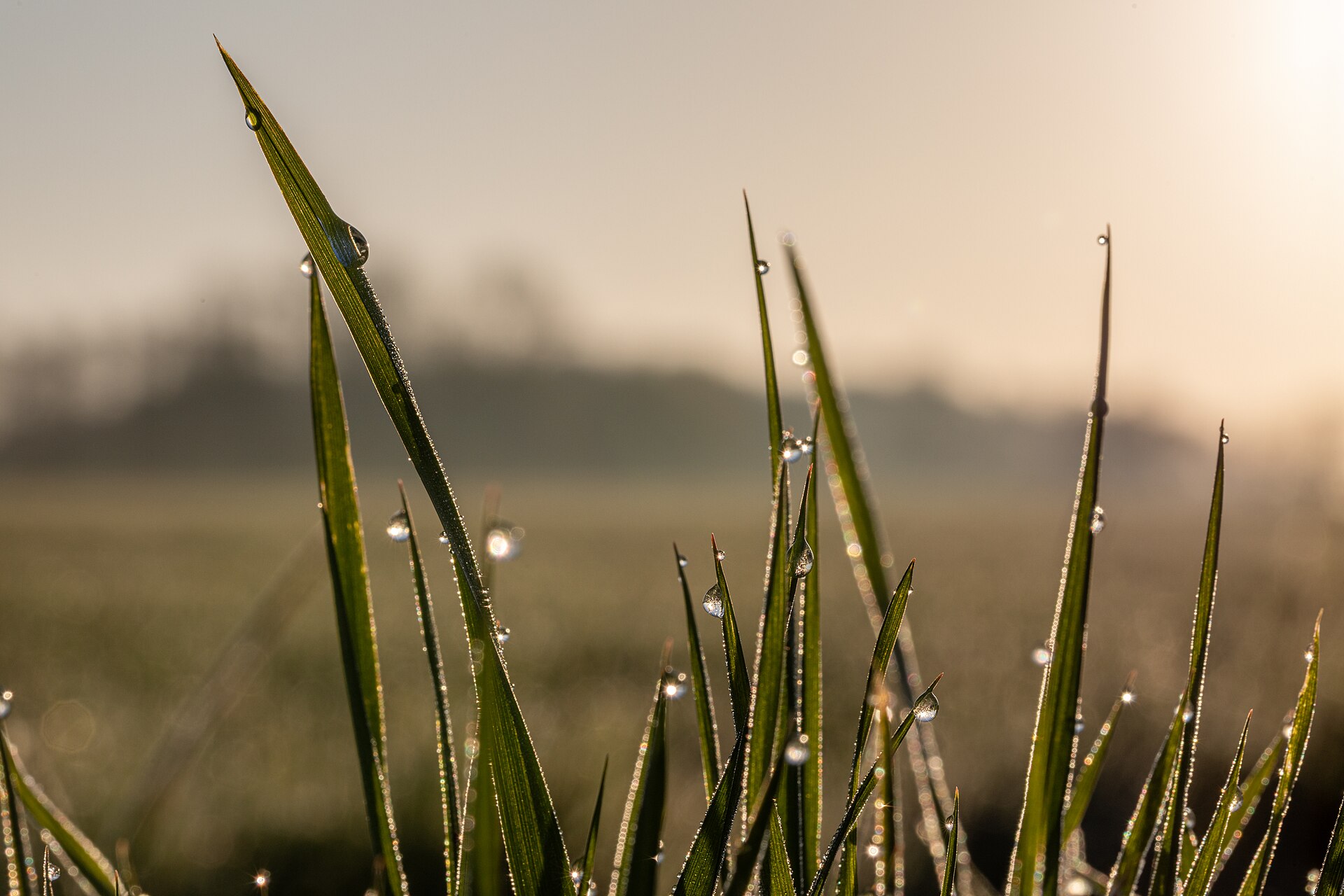
Look at a leaf in the early morning.
There is dew on it.
You could simply say:
a drop of water.
Nothing wrong with that.
But look longer.
송알송알.
조롱조롱.
대롱대롱.
The scene changes slightly each time.
Rain is the same.
You can simply say:
It is raining.
But listen carefully.
똑똑.
뚝뚝.
부슬부슬.
주룩주룩.
좔좔.
콸콸.
Same general event.
Different texture.
Different force.
Different mood.
More Words May Mean Someone Looked More Closely
A toddler walks.
You could say:
walk.
But to call it
아장아장 — ajang-ajang
you have to notice the tiny, unstable steps.
A cat approaches.
You could say:
walk.
But to say
살금살금 — salgeum-salgeum
you must notice not only speed, but intention.
A spring breeze blows.
You could say:
wind.
But to call it
살랑살랑 — sallang-sallang
you must notice how lightly it touches the skin.
Rich vocabulary does not necessarily prove a culture “sees better.”
But it can preserve evidence that people have repeatedly noticed certain distinctions.
That Is Why Korean Can Be So Difficult to Translate
Take:
아이가 아장아장 걸어왔다.
You can translate it as:
The toddler walked toward me with tiny, unsteady steps.
Good translation.
But look what happened.
Four Korean syllables—
아장아장
—required an entire phrase.
Inside the Korean word were:
smallness,
cuteness,
awkwardness,
short steps,
repeated motion.
Or:
봄바람이 살랑살랑 불었다.
“A soft spring breeze blew gently.”
The meaning works.
But something in 살랑살랑 disappears.
This is why good translators do not merely translate words.
They translate scenes.
In the Age of K-Pop and K-Dramas, These Words Became Cultural Content
A foreign fan starts learning Korean.
At first:
사랑.
Love.
보고 싶다.
I miss you.
괜찮아.
It’s okay.
Then stranger words begin appearing.
두근두근.
콩닥콩닥.
반짝반짝.
말랑말랑.
폭신폭신.
알콩달콩.
티격태격.
아슬아슬.
In webtoons it becomes even more obvious.
두근.
흠칫.
움찔.
벌떡.
휙.
슬쩍.
Add two syllables to a drawing and suddenly it moves.
Korean mimetic words are short.
Rhythmic.
Visual.
Memorable.
Unexpectedly, they are perfect for the digital-content era.
Put Them All Together and Korean Starts Looking Slightly Insane
Water and Rain
똑똑
뚝뚝
부슬부슬
주룩주룩
졸졸
줄줄
좔좔
콸콸
철철
보글보글
부글부글
찰랑찰랑
출렁출렁
넘실넘실
첨벙첨벙
Light and Surface
반짝반짝
번쩍번쩍
빤짝빤짝
반들반들
번들번들
반질반질
Movement
살금살금
사뿐사뿐
아장아장
뒤뚱뒤뚱
성큼성큼
터벅터벅
비틀비틀
휘청휘청
엉금엉금
꼼지락꼼지락
꿈틀꿈틀
폴짝폴짝
펄쩍펄쩍
Texture
보들보들
말랑말랑
물렁물렁
폭신폭신
푹신푹신
쫀득쫀득
쫄깃쫄깃
끈적끈적
미끈미끈
매끈매끈
까슬까슬
꺼끌꺼끌
오돌토돌
울퉁불퉁
Emotion and Expression
방긋방긋
생글생글
싱글벙글
히죽히죽
울먹울먹
머뭇머뭇
우물쭈물
안절부절
두근두근
콩닥콩닥
조마조마
아슬아슬
Shape and Arrangement
송알송알
방울방울
조롱조롱
대롱대롱
옹기종기
오밀조밀
알록달록
울긋불긋
삐뚤빼뚤
빽빽
듬성듬성
소복소복
수북수북
If simply reading the word starts to create an image,
the sound has already done half the explaining.
Korean Is Strangely Precise and Strangely Vague at the Same Time
Here is the funny part.
When describing physical sensation, Korean can be obsessive.
Banjjak or beonjjeok?
Mallang-mallang or mulleong-mulleong?
Norata or nureota?
But human conversation can suddenly become incredibly vague.
그거 좀 그렇지 않아?
“Isn’t that a bit… you know?”
A bit what?
A Korean listener often knows.
생각 좀 해볼게.
“I’ll think about it.”
Does that mean yes?
No?
Maybe?
괜찮아요.
“It’s okay.”
Is it really okay?
Is that a polite refusal?
Are they angry but pretending not to be?
A Korean learner eventually realizes:
You have to read the face too.
Korean can obsess over tiny sensory distinctions while leaving enormous social meaning to context.
That contradiction is one reason the language is difficult.
And one reason it is fascinating.
“Difficult” Does Not Mean Bad
Calling Korean difficult for English speakers does not mean Korean is inefficient.
It simply organizes information differently.
English has things it does beautifully.
Korean has things it does beautifully.
One of Korean’s remarkable strengths is its ability to place
how something looks, moves, feels and sounds
inside the word itself.
At some point a Korean learner discovers that the vocabulary book has become strange.
You no longer learn merely:
rain.
You learn:
부슬부슬 and 주룩주룩.
You no longer learn simply:
yellow.
You learn:
노랗다 and 누렇다.
You no longer learn:
soft.
You must feel the difference between:
보들보들,
말랑말랑,
폭신폭신.
Korean Can Make You Look at the World a Little Longer
It is dawn.
A drop of dew hangs from the tip of a leaf.
You can call it:
a water droplet.
That is correct.
But look a little longer.
It becomes:
송알송알.
조롱조롱.
대롱대롱.
Rain begins.
You can say:
It is raining.
Correct.
But listen longer.
똑똑.
뚝뚝.
주룩주룩.
좔좔.
콸콸.
A flower is yellow.
But look longer and there is a difference between
vivid yellow,
yellowish,
dull yellow,
murky yellow.
Someone smiles.
But look carefully and there is a difference between
방긋,
빙긋,
생긋,
히죽,
싱글벙글.
Perhaps the beauty of Korean mimetic language is not simply that it has many words.
Maybe the beautiful part is that before someone invented those words,
someone must have
looked once more.
Listened once more.
Touched it once more.
Noticed:
“This is slightly different.”
And then decided that tiny difference deserved a name.
So When It Rains…
“The weather forecast says it will rain today.”
Perfectly accurate.
Good enough for an app.
But maybe not enough for someone sitting by a window.
Against the glass:
똑똑 — ttok-ttok.
From the roof:
뚝뚝 — ttuk-ttuk.
As the rain becomes heavier:
주룩주룩 — juruk-juruk.
Down the gutter:
좔좔 — jwal-jwal.
During a downpour:
콸콸 — kwal-kwal.
And when the rain finally stops,
a little droplet hangs from the edge of a leaf:
대롱대롱 — daerong-daerong.
Korean is a strange language.
Hangul itself has a relatively small set of letters.
Yet by rearranging and slightly changing those sounds, Korean gives
size to light,
force to water,
temperature to color,
personality to movement,
and expression to texture.
So when someone tells a Korean learner,
“Hangul is easy!”
that is slightly unfair.
The door may be easy to open.
But once you walk through it,
rain is falling inside.
**Buseul-buseul.
Juruk-juruk.
Jwal-jwal.
Kwal-kwal.**
And somewhere nearby a Korean person says:
“No, no. That’s not quite the feeling. It’s more… moist and bodeul-bodeul, but slightly mallang-mallang, you know?”
The foreign learner opens the dictionary again.
The Korean looks genuinely confused.
“Why is this difficult?”
Of course it is.
Of course it is.
Read next: From a $3 Beauty Product to a Global Obsession — how K-beauty conquered the world, and why Korea’s picky consumers deserve the credit.
More Korea, past the obvious: Language · Culture · Daily Life
Photo: Dietmar Rabich / Wikimedia Commons / “Dülmen, Kirchspiel, Welte, Morgentau auf Grashalmen — 2021 — 7569” / CC BY-SA 4.0.