
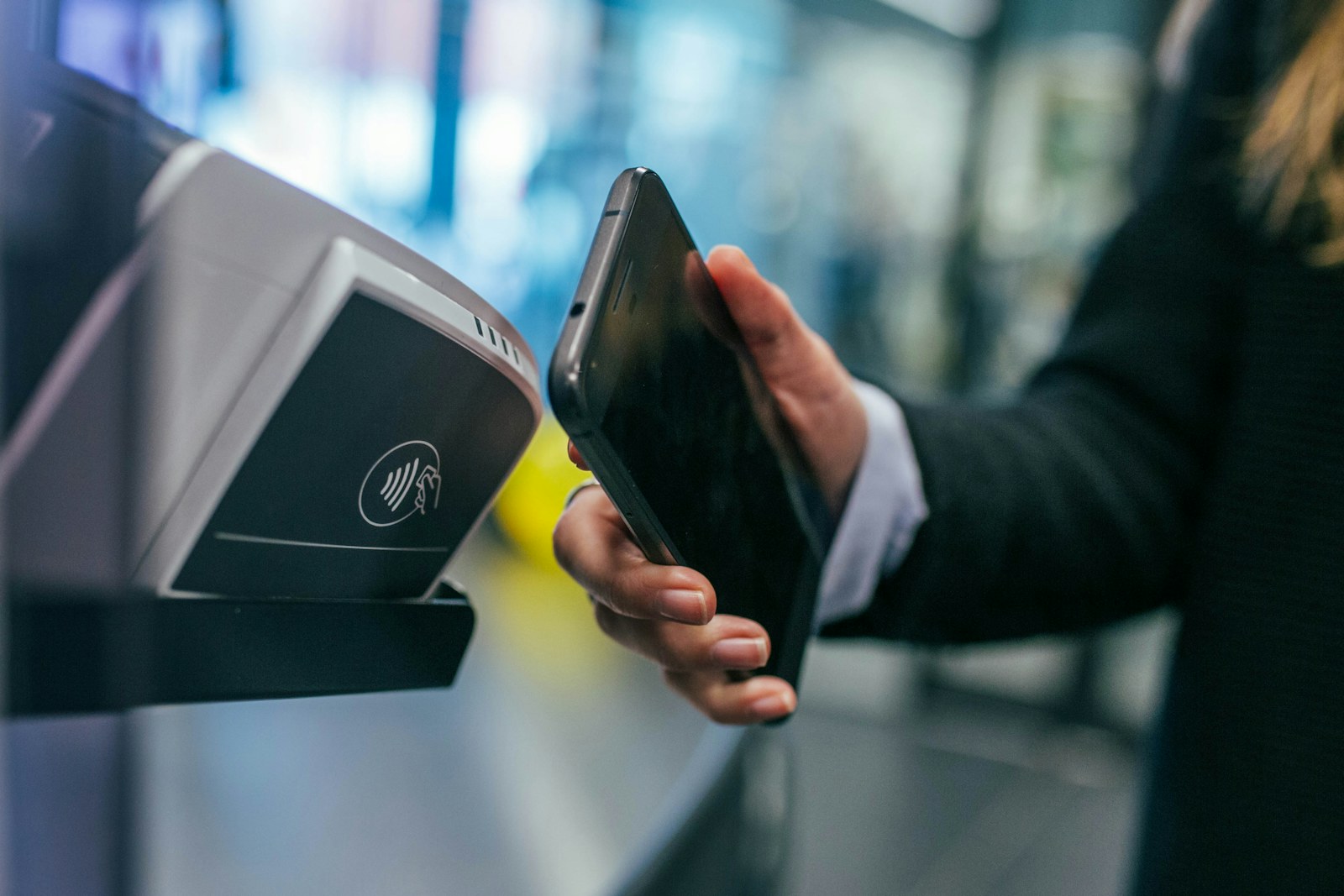
Korea Is a Payments Paradise — If You’re Korean
Inside the country, paying for almost anything is effortless. Step outside the domestic ecosystem — or enter it as a foreigner — and one of the world’s most advanced payment markets suddenly develops a surprising number of doors.
Paying in a Korean restaurant can take five seconds.
Hand over a card. Tap or insert. Done.
Cash is optional in most daily life. A coffee costing a few dollars goes on a card. A taxi takes a card. A hospital takes a card. Online, saved cards and local wallets can make checkout nearly invisible.
For Korean residents, this is so normal that the claim “Korea has an awkward payment system” sounds ridiculous.
Then a Korean business tries to sell globally.
“Just use Stripe” is excellent advice — in countries where you can
Developers around the world often treat Stripe as basic internet plumbing. Build the site, connect Stripe, start taking payments.
A Korean founder can follow the tutorial right up to the supported-country page.
United States. United Kingdom. Japan. Singapore. Thailand. Much of Europe.
South Korea is still not a standard supported country for locally registered Stripe Payments accounts as of 2026.
This feels almost insulting until you understand the history. Korea does not lack payment infrastructure. It has too much of its own.
Domestic payment gateways, card companies, VAN networks, banking rules, identity verification and local wallets grew into a sophisticated ecosystem long before global developer-first payment platforms became the default elsewhere.
The house is not empty. It is fully furnished, and none of the doors are standard size.
PayPal is global too — until the transaction is Korean
PayPal is another example. Korean users can use it for cross-border transactions, but domestic payments between Korean PayPal accounts are restricted.
Again, this is not evidence that Korea cannot do digital payments. Korea can do them extremely well.
It is evidence that “global payment service” and “domestic payment infrastructure” are not the same thing.
For a foreign entrepreneur, this can be maddening. For a Korean consumer buying locally, it may be completely irrelevant.
Apple Pay arrived in 2023, which tells you almost everything
Apple Pay launched in the United States in 2014. It entered Japan and China in 2016. South Korea got it in March 2023.
This was not because Korea had failed to discover smartphones.
Samsung is Korean.
Nor was it because Koreans avoided cards. Korea has one of the world’s most deeply embedded card cultures.
The problem was that new payment technology had to enter a mature landscape of terminals, card issuers, network economics and local rules. Replacing a bad system is easy to justify. Replacing a good system because a newer one is internationally fashionable is much harder.
Technical history has a cruel joke built into it: countries that modernize early sometimes inherit the most expensive legacy systems.
China chose a different road
China’s payment transformation makes the contrast useful.
Korea moved from cash toward an extraordinarily successful card system, then layered mobile wallets on top. China leapfrogged more aggressively into QR-based mobile payments through Alipay and WeChat Pay.
The visible experience is different. In China, even very small merchants can operate around a QR code. The phone is not merely replacing the plastic card; the mobile wallet became the center of the transaction.
China has also made a major effort to let foreign visitors link international cards to those wallets. Korea is expanding international QR connections too, including cross-border arrangements with other Asian payment networks.
The point is not that China is “more advanced” in every sense. It is that payment systems become path-dependent. What you built yesterday determines what feels natural tomorrow.
Korea’s cards were almost too successful
Korean consumers had little reason to rebel against the plastic card. Merchant acceptance was widespread. Even small transactions could be paid by card. Tax policy helped encourage electronic payments. Banks and card companies created strong loyalty systems.
If paying by card takes three seconds, a QR code is not obviously a revolution.
This is why the phrase “mobile payments” can hide two very different architectures. In Korea, the phone often sits on top of the card system. In China, the wallet became a more fundamental layer.
Both are digital.
The skeletons are different.
The Korean customer is happy. The foreign customer may meet a checkpoint
International visitors can pay with foreign cards in many Korean shops without trouble. The friction tends to appear elsewhere: online ticketing, domestic booking systems, certain kiosks, local phone verification or services that assume a Korean-issued card.
This is where payments connect to the identity problem discussed earlier.
Korea often does not merely ask, “Can you pay?”
It may also ask, “Who are you, whose phone is this, and does your name match the database?”
For a Korean user, these systems create trust and convenience.
For a visitor, they can feel like immigration control with a shopping cart.
Koreans experience the same frustration in reverse
Then a Korean user goes abroad — digitally.
A service launches in the United States first. Korea is not supported. A beta feature arrives later. A foreign marketplace does not accept the preferred Korean payment method. A new Apple product launches in major markets before Korea.
Koreans reasonably ask, “Why are we always an exception?”
Global product teams may be asking the mirror image: “Why does Korea require an exception?”
Neither side is necessarily hostile. They simply have different defaults.
Software companies dislike exceptions because every exception becomes code, testing, compliance and customer support.
Korea is a valuable exception.
It is still an exception.
Large countries can force the world to adapt. Korea has to negotiate
The United States exports many of the world’s technology standards because so many technology companies originate there. China can demand local adaptation because its domestic market is enormous. The European Union uses market size and regulation to force global platforms to change behavior.
Korea has remarkable purchasing power and technical sophistication, but a population of about 52 million. It is big enough to matter and small enough that global companies sometimes postpone the special work.
That creates a strange position: Korea is technologically powerful without always having standards power.
A good payment system is one you do not notice
Excellent payments are boring.
You tap. It works. You remember nothing.
Bad payments are unforgettable.
Your card is rejected. A popup appears. A security module must be installed. Your phone number is wrong. The name does not match. The browser restarts. Somewhere, a person begins to hate fintech.
Korean residents often fail to appreciate how good their domestic payment experience is precisely because it disappears into daily life.
Foreign visitors notice the places where it does not disappear.
So is Korea advanced or backward?
Yes.
That is not a joke answer.
Korea’s domestic card infrastructure is excellent. Mobile and cardless payments are widespread. Local wallets are sophisticated. Yet global payment-platform access for Korean businesses remains uneven, and foreign-user onboarding can still contain unnecessary friction.
These facts do not cancel one another.
Technology does not progress along a single scoreboard.
A country can be first in one layer and awkward in the layer above it.
Korea is a payments paradise.
If you have a Korean phone number, Korean bank account, Korean card and enough Korean to read the buttons.
The next frontier is not making domestic payment two seconds faster.
It is making the system care less about where the person pressing “Pay” came from.