Is Free Subway Travel for Seniors Really a Loss?
On the subway operator’s books, a free ride is a cost. On a hospital’s books, a market’s books or an elderly courier’s household budget, the same trip may look very different.
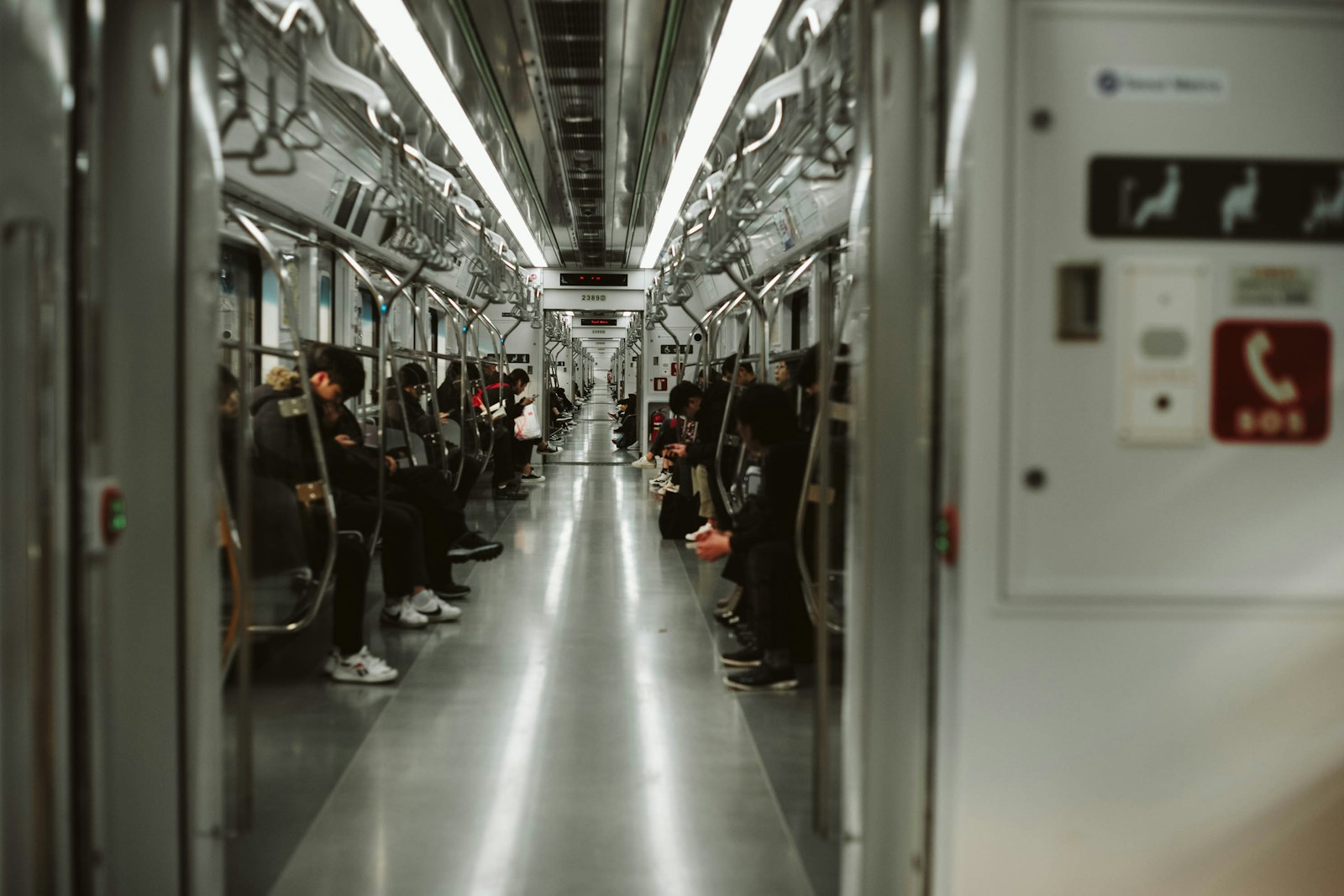
Early in the morning on the Seoul subway, you may see an older passenger carrying a small envelope or light package. No uniform. No van. No motorcycle.
They may be a senior courier.
The business model is wonderfully simple: people aged 65 and older can use much of the Seoul metropolitan subway network free of charge. That makes public transit a production tool. A courier can move documents or small items across the city with almost no transport cost.
One social-welfare policy quietly created the cost structure for a niche delivery industry.
That alone should make anyone cautious about describing a free ride as merely a loss.
But the loss on the transit operator’s books is very real
Seoul Metro faces severe financial pressure. Fare revenue does not fully cover the cost of transporting passengers, while senior free travel contributes a large accounting burden that grows as the population ages.
In 2025, the estimated loss associated with free rides was about KRW 449 billion, while Seoul Metro also recorded a substantial overall net loss.
These are not imaginary numbers. Trains require electricity. Staff need wages. Stations need maintenance. Old signaling systems must be replaced. Safety is expensive.
Somebody pays.
The question is not whether free travel costs money.
The question is what exactly should be counted as the cost — and who should pay it.
Is a free ride a lost full fare?
Suppose a 70-year-old rides the subway for free.
If they would have paid full fare otherwise, the operator has clearly lost revenue.
But what if they would have stayed home?
What if they would have walked?
What if they would have taken a bus?
A free trip is not automatically equivalent to a missing full-price ticket.
There is also a difference between accounting cost and marginal cost. In an off-peak train with empty seats, one additional passenger does not require a new train to be dispatched. During rush hour, however, crowding is itself a cost.
Both arguments are true in different conditions.
This is why public-transport accounting becomes political very quickly.
“The train is running anyway” is not a complete answer either
Supporters of free senior transit sometimes argue that the train would operate regardless, so filling an empty seat costs little.
That is reasonable at 2 p.m. on a quiet line.
It is less convincing at 8 a.m. in central Seoul.
Older passengers are not absent from peak periods. In 2025, people aged 65 and over using free rides made up a meaningful share of rush-hour users.
Stations, escalators, rolling stock and capacity still wear out. Crowding affects everyone.
Free does not mean physically costless.
But a subway is not a cinema
A private cinema can ask whether each seat produced enough ticket revenue. A public transport network exists for a broader reason: to make the city function.
An older person uses the subway to visit a hospital, market, friend, community center or part-time job. They walk to the station. They buy lunch. They stay socially active. They may help care for grandchildren. They may delay isolation and inactivity.
Some of those benefits may reduce costs elsewhere — healthcare, social care or family burden. Some may increase local spending.
The subway operator does not receive those savings.
This is a classic public-policy problem: one institution pays, while another institution — or society generally — receives part of the benefit.
The senior courier makes the accounting problem obvious
For an elderly subway courier, free transit is not only welfare. It is business infrastructure.
The worker earns income. The courier company can offer a low price. The customer receives a service. The worker walks, moves around the city and remains economically active.
Seoul Metro records a free passenger.
The labor market records a worker.
The restaurant near the delivery destination records a lunch customer.
The healthcare system may record a more active older adult.
Same person. Different spreadsheet.
Public policy becomes messy because there is no single spreadsheet labeled “society.”
The subway pass also became a travel pass
Seoul’s rail network extends far beyond the old central city. Metropolitan lines reach deep into satellite cities and neighboring regions. For a retired person with time and free rail access, distance changes meaning.
A ninety-minute ride is torture for a commuter who has to do it twice a day.
For a retired person heading to a market, riverside park or nearby city, it can be a day trip.
The same train is a commute for one passenger and tourism infrastructure for another.
That produces spending around stations and destinations that the transit operator does not capture.
There is an irony: the oldest seniors may need buses more than subways
As people age, long walks to stations and stairs become harder. Buses can be more useful for short local trips to clinics, markets and community facilities.
Yet Korea’s traditional senior benefit has focused heavily on subway travel. Older riders can therefore face a strange situation: the longer rail trip is free, while the short bus trip from home to the station may not be.
That is one reason Seoul has been debating changes to the system, including possible adjustments to the free-ride age and expanded bus support for older residents.
The debate is not only about saving money. It is about whether a policy designed decades ago still matches how older people actually move today.
Is 65 still “old”?
This question did not need much discussion when the policy was created.
It does now.
Many 65-year-olds work, travel, exercise and support elderly parents of their own. Others at the same age are poor, ill or socially isolated.
A universal age threshold is wonderfully simple and obviously blunt.
Policy alternatives exist: income tests, off-peak discounts, limited free trips, integrated mobility credits, or a higher age threshold combined with bus support.
Each can be more targeted.
Each is also more complicated.
“65 and over: free” may be crude, but nobody needs a 14-page application form to understand it.
Simple welfare is easy to use. Precise welfare is easy to admire in a report
This is a recurring policy trade-off. Means-tested systems can direct benefits more precisely but create administrative cost and barriers. Universal systems are easier to access but give benefits to people who may not need them.
The perfect system exists mainly in PowerPoint.
Real people forget documents.
Real agencies make mistakes.
Real elderly residents may not navigate complex digital applications well.
Simplicity has value too.
The easiest things to measure dominate the debate
A transit operator can estimate foregone fares. That produces a clean number.
It is much harder to measure the value of reduced loneliness, extra walking, a grandparent helping with childcare, a market gaining customers or an older person delaying institutional care.
Difficult-to-measure benefits should not be treated as infinite.
But they should not be treated as zero either.
Policy debates often favor whatever fits neatly into a table.
Life is annoyingly bad at spreadsheets.
So is free senior subway travel welfare, subsidy or investment?
Probably all three.
For a low-income senior, it is clearly welfare.
For an affluent senior, it may look more like a discount.
For a courier, it is productive infrastructure.
For a local market, it can be customer access.
For Seoul Metro, it is a cost.
That is why arguments that begin with “It obviously is…” tend to go wrong.
Watch the same passenger through different accounting systems
The older courier steps through the gate and pays zero won.
Seoul Metro records a free rider.
The courier company records labor.
The client records a delivery expense.
A restaurant records a lunch sale.
The family sees a father or mother who still has work and somewhere to go.
One person. Several economic identities.
Korea will almost certainly have to redesign senior transport benefits as the population ages. The existing system cannot be treated as untouchable simply because it is popular.
But the redesign should begin with a more difficult question than “How much fare revenue did we lose?”
A subway does not only move paying customers.
It moves economic activity, health, relationships and time.
The gate may record a fare of zero.
That does not mean the trip is worth zero.